
Momentum into Mission-Ready Execution: The 2026 Defense Software & Data Summit Recap
On March 10, 2026, the doors of The Anthem in Washington, D.C., opened to a room filled with the leaders who will define the future of American security. The 4th annual Govini Defense Software & Data Summit arrived at a pivotal moment for the nation. For years, speed and agility in defense acquisition have been aspirations; under the Trump Administration they have now become absolute imperatives.
We have entered what many at the Summit called the "Golden Era of Defense", a period characterized by expanding policy authorities, empowered leadership, and the falling of long-standing structural barriers. But as Govini CEO Tara Murphy Dougherty noted in her opening remarks, the Golden Era is won through execution, not just momentum.
Setting the Stage: From Intent to Execution
In her address, Murphy Dougherty acknowledged that while 2026 marks a high-water mark for modernization mandates, the right conditions are merely the ingredients for change. She warned that the essential ingredients of funding and policy directives are insufficient without a fundamental shift in how the defense acquisition system operates.
“Modernization is no longer a suggestion. It is a mandate,” Murphy Dougherty stated. "But to materialize all of this momentum into real change, there must be commitment, will, and sustained action. So, the question our current moment in time raises is: Are we ready? Not in principle. Are we ready to execute?"
.png)
Murphy Dougherty provided a candid assessment of the quagmire currently separating intent from execution. She described the “muck” between innovative AI solutions and the institutional indecisiveness that prevents them from scaling. This asymmetry, she argued, is not a failure of personnel, but a failure of a system optimized for oversight rather than outcomes.
“On the front lines, decisions happen in seconds. Back at home, delivery can take years. In the past year, operational tempo has accelerated. Institutional tempo has not. This asymmetry is what creates the sizable gap between the demand for American military power and the supply... Warfighter heroics keep the system running. But heroics are not institutional preparedness, nor are they a long-term substitute.”
Murphy Dougherty concluded that Govini’s mission is to move beyond merely closing these gaps. Instead, the goal is to leverage AI, data, and software to transform the entire defense enterprise into a strategic advantage—ensuring that when the government is called, the system moves “at the speed of the mission.”
The “Pin” and the Problem: Under Secretary Michael Obadal on Translating Momentum into Mission Readiness
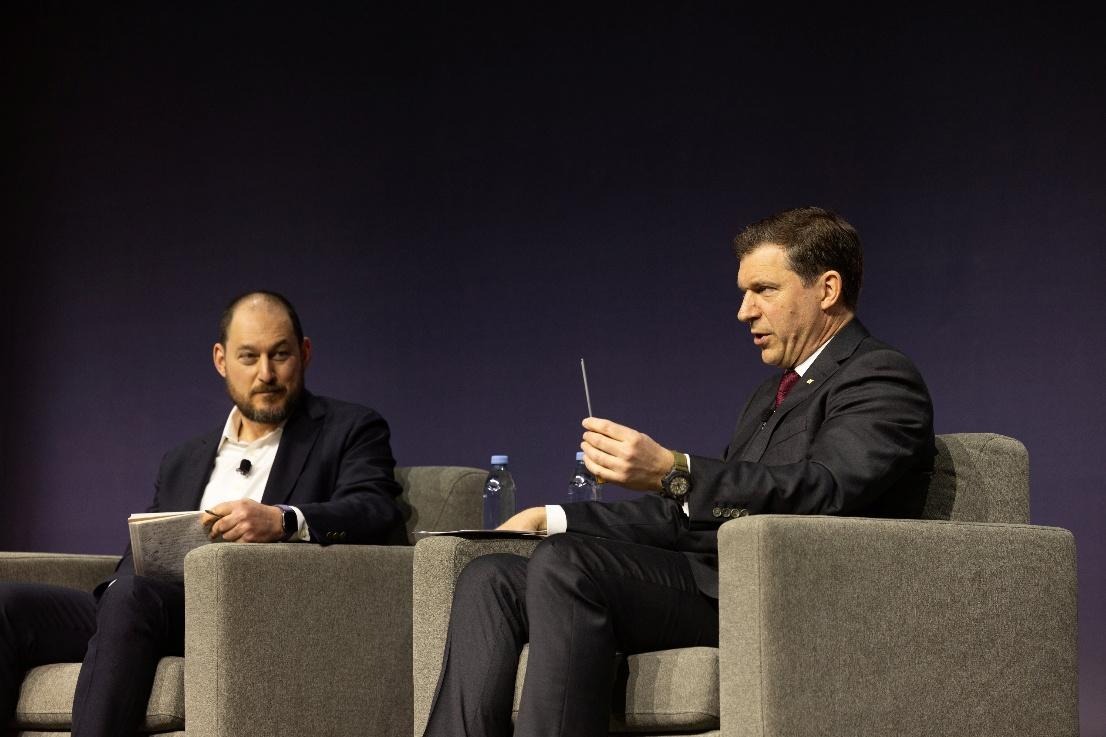
After this call to action by Murphy Dougherty, the morning proceeded with a sobering reality check from Hon. Michael A. Obadal, Under Secretary of the Army. In a fireside chat with POLITICO’s Joe Gould, Secretary Obadal held up a $988 steel cotter pin—a small, unassuming part used to secure bolts that was stalling the readiness of several Bradley Fighting Vehicles.
“This small piece, we have three or five Bradleys waiting on it because it holds in the toe pencil,” Obadal explained. “This right here is a perfect example of, we're going back and we're ordering things for hundreds of dollars that we could make for a few cents in the organic industrial base.”
The “pin” served as a powerful metaphor for the supply chain bottlenecks that the new Warfighting Acquisition System is designed to eliminate. The mandate from Secretary of War Pete Hegseth is clear: move acquisition from a bureaucratic hurdle to a mission-ready advantage.
The Engine of Peace Through Strength
The transition to this new footing requires a seamless alignment among warfighter demand, private capital, and the digital systems that turn intent into output. In a panel moderated by CNBC’s Morgan Brennan, leaders from each of these worlds discussed how the Department of War (DoW) and industry are moving beyond legacy models to build a resilient defense enterprise.
Mark Marengo, Managing Director at J.P. Morgan, noted: “I've been doing this for 30 years, and I've never seen this level of partnership and cooperation across industry, government, and the financial community.” Christopher T. Calio, Chairman and CEO of RTX, said, “The Department has given us a very clear North Star. And now we've got to go out and hit it.” Calio highlighted how targeted investments and a dedicated workforce at RTX are already driving faster results.
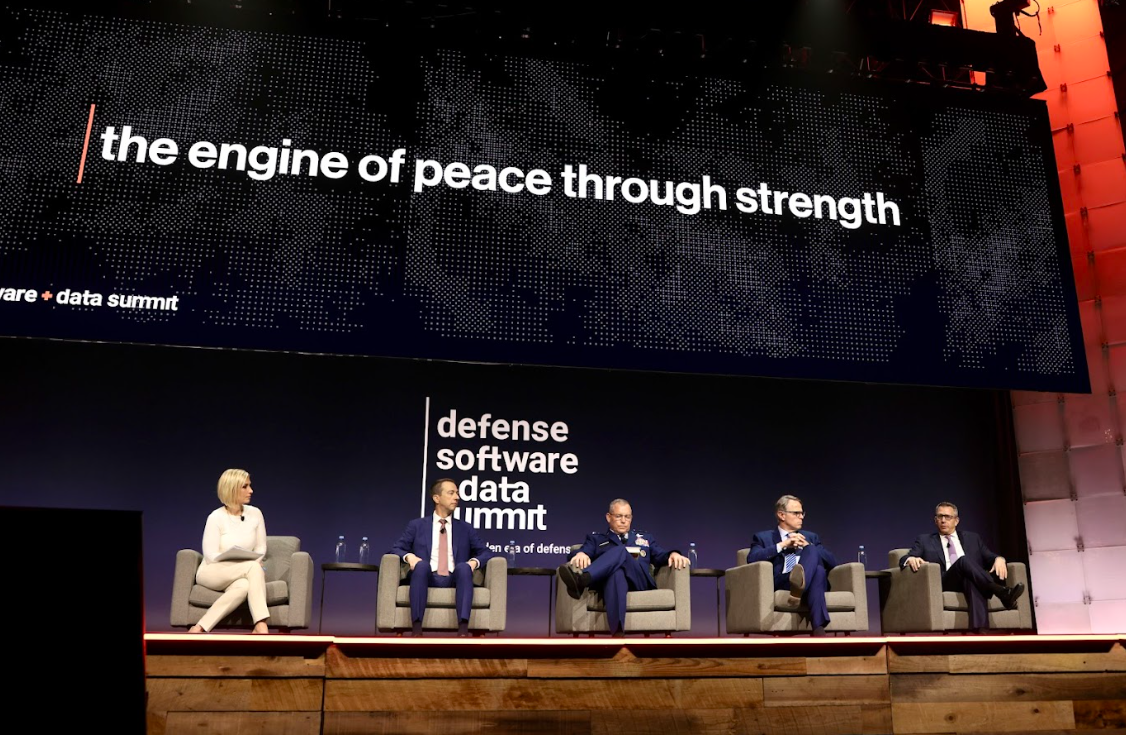
Major General David W. Smith, Deputy to the Chief of Air Force Reserve, emphasized that while leadership is committed to speed, the government must make requirements easier for industry to meet. “We need to just tell industry: What is [the] problem we're trying to solve? What is our capability gap? Allow industry to innovate on that, rather than the older system where we had these very exquisite requirements that we used to use when we were trying to deal with the industry.”
Joseph Welch, Executive Director for Transformation and Training Command (T2COM) and Portfolio Acquisition Executive for Command and Control (C2) and Counter C2, urged immediate feedback on potential acquisition hiccups so they can be resolved up front and quickly: “I would encourage anybody who thinks that we're doing something silly; you see a solicitation RFI; you think we could be doing better? Reach out to one of us.”
Major General Smith summed up the panel consensus: “If we want to create Freedom's Forge 2.0, it's going to take all of us up here on this stage working together. So, defense, industry, and private equity. That's how we get a revitalized defense industrial base.”
Augmenting the Arsenal through Software-Defined Manufacturing
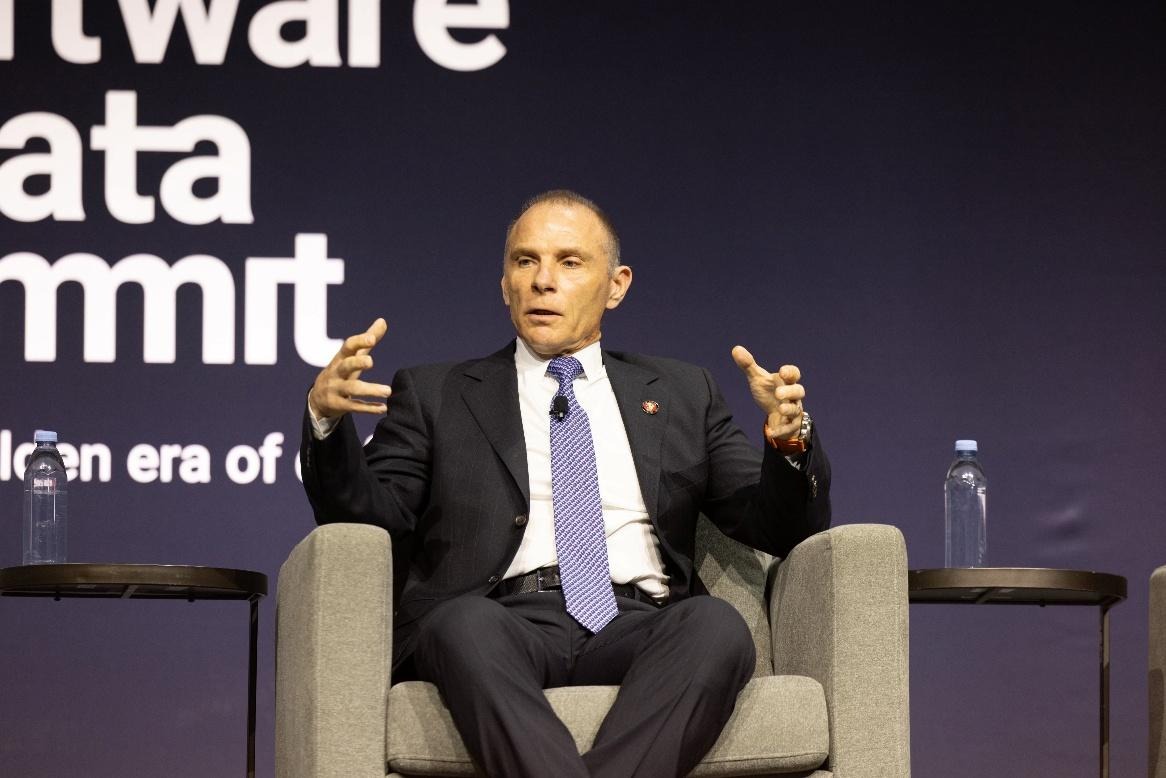
The transition to industrial-scale execution is being further augmented by a revolution in software-defined manufacturing. In a fireside chat moderated by Govini Senior Vice President Jeb Nadaner, Kevin Czinger (Divergent Technologies) and Peter Meijer (The New Industrial Corporation) discussed how digital-first production is actively reinforcing the American Arsenal.
Czinger shared a staggering example of what fully-digitized manufacturing can achieve. “We recently worked with Mach Industries on a ground-launched cruise missile. It went from a whiteboard to a successful flight in just 71 days. …We expect to manufacture several thousand cruise missile systems this year using this system.”
This capability represents a critical shift in how the U.S. can develop and deploy hardware, proving that when software drives the factory floor, the timeline for innovation shrinks from years to weeks.
A Mandate for Modernization: Under Secretary Duffey on the WAS in Action
During a featured podium speech, Hon. Michael Duffey, Under Secretary of War for Acquisition and Sustainment, laid out the stakes and the mandate for the Warfighting Acquisition System. As chief implementer of this initiative, he argued that the gap between the speed of the commercial world and the sluggish pace of government processes has never been so vast or consequential.
“While we have debated requirements, [our adversaries] have conducted hundreds of hypersonic weapons tests—nearly 10 times as many as the United States. While we have published acquisition strategies, they are building a modern naval fleet at a speed not seen since World War II.”
Duffey highlighted the Trump Administration’s answer to this gap and DoW’s progress in creating an acquisition system built not for caution and compliance, but for speed and outcomes. “In this unique moment, we have a generational opportunity and a moral obligation to dismantle the slow, risk-averse bureaucracy of the past and build an acquisition system that delivers decisive capabilities at the speed of relevance,” he said.
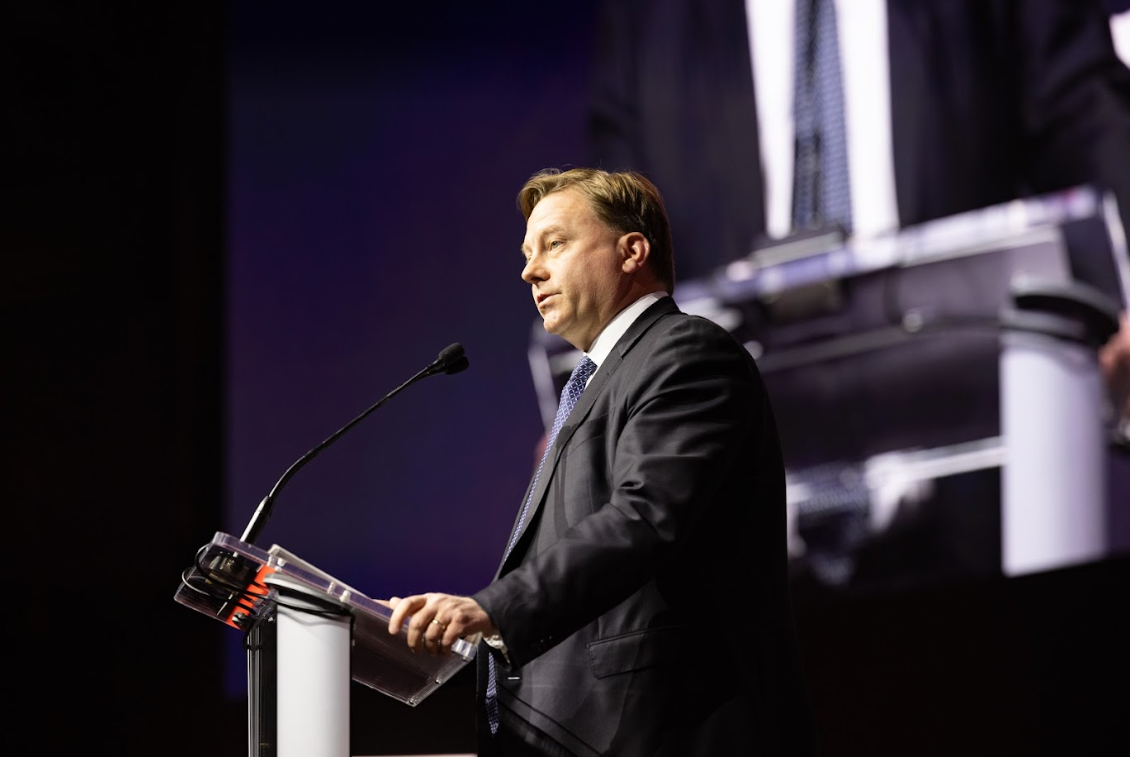
“The job of our acquisition professionals is no longer just to manage a process. Our mission is to be a connector, to serve as the critical link that connects the warfighter's problem to the innovator solution with the least possible friction” Duffey explained. “Our mission to reduce that pathway is to shorten that as much as possible, to remove every obstacle, every toll booth, every delay that stands between a good idea and getting in the hands of the war fighter.
Noting that “time is our most critical, non-recoverable resource,” he urged the audience to be bold and challenge the status quo: “Leaders at every level must become agents of change.” Duffey set a high bar for the afternoon's deep dives into the Department’s most sensitive portfolios.
The No-Fail Mission: Nuclear Modernization
This shift from process to performance provided the ideal backdrop for a deep-dive panel on nuclear modernization. In the nuclear enterprise, the margin for error is zero. This “no-fail” mandate requires an enterprise that responds at the speed of the threat.
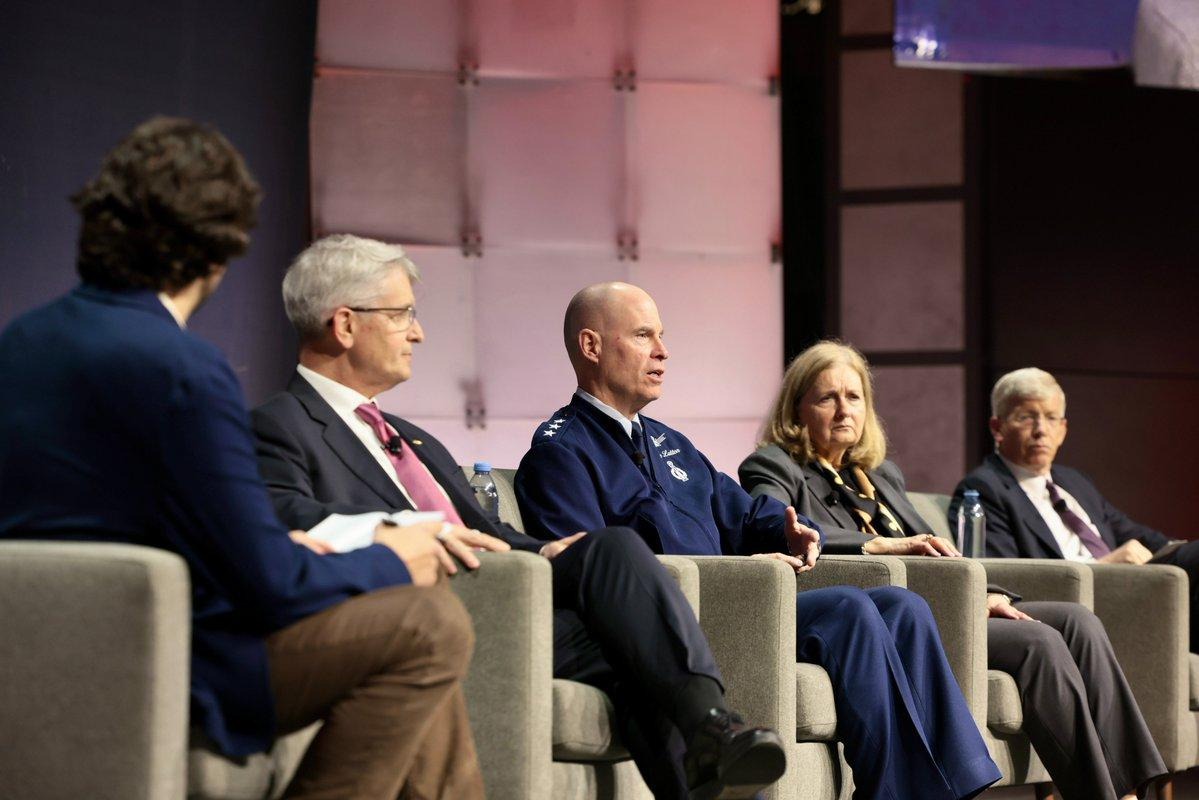
Hon. Brandon Williams, Administrator of the NNSA, highlighted the three pillars of NNSA’s immediate focus: deterrence, urgency, and production. “Six months beyond that, it's really about execution,” he explained, noting that NNSA must demonstrate it is modernizing the production capability, delivering weapons on time, and keeping pace with the growing deterrent challenges from China and Russia.
For Lt. General Michael Lutton, Deputy Commander of U.S. STRATCOM, “modernization doesn't mean more. [It] means modernization.” As an example, he cited the long-term need to modernize Minuteman III, which has been on alert for the nation for five decades. “We will have to sustain the nuclear deterrent force all the way through the modernization of its replacement.”
Both emphasized the urgency of the transformation. “Modernization provides decision space, it provides options for our most senior leaders, Secretary of War, President of the United States,” said Lutton. “We have to have an enterprise that can respond at pace,” said Williams. “The two of us have a no fail mission for the nation, period.”
Accelerating Mission Readiness: Leveraging Flexible Authorities to Bridge the Innovation Gap
The afternoon sessions shifted focus toward the practical application of the Administration’s vision: leveraging flexible authorities and empowered leadership to bridge the gap between industry innovation and immediate warfighter needs. Moderated by Breaking Defense’s Valerie Insinna, this panel explored how the Department of War is moving beyond business as usual to ensure combat readiness.
Rear Admiral Chad Jacoby, Deputy Commandant for Systems at the U.S. Coast Guard, provided an example of how streamlining is already yielding results. He described how federal requirements documents at the Coast Guard—which once spanned 200 pages and required 27 signatures—were reduced to a single page document in recent ship construction programs. “Moving at speed has allowed us to be bold,” Jacoby said. “We’re going to be nimble and we’re going to be asking for industry to help us along the way.”
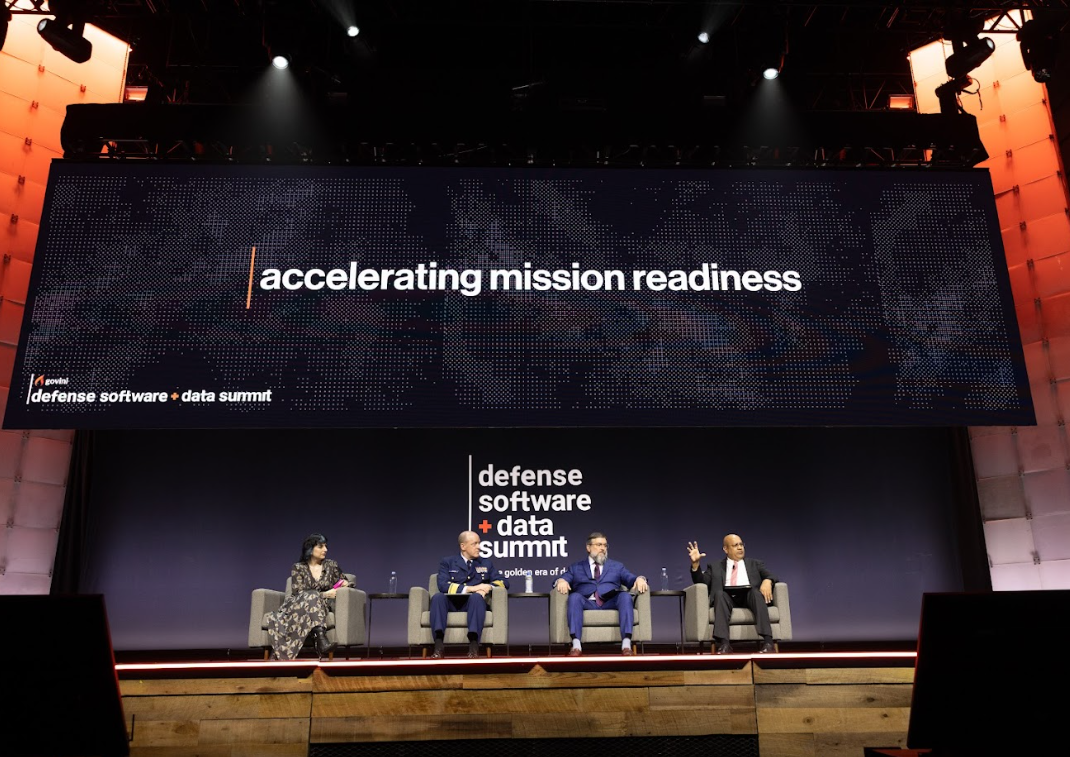
Dr. Vic Ramdass, Principal Deputy Assistant Secretary of War for Industrial Base Policy, and Patrick N. Kelleher, Deputy Assistant Secretary of the Army for Materiel Readiness, emphasized that this agility is the new baseline. The discussion underscored that by empowering leaders to use the full extent of their authorities, the Department is finally aligning its institutional tempo with the operational needs of the force.
Trust and Interoperability in AI: Deploying Frontier Models for Combat Advantage
As the Summit moved into the final panels, the conversation turned to the “brains” of the modern enterprise: Artificial Intelligence. This session, moderated by Govini CEO Tara Murphy Dougherty, focused on the intersection of commercial AI and mission-critical data, and the practicalities of deploying frontier models within the Department’s framework.
The consensus was clear: AI adoption is not about a single algorithm, but about building a trusted, interoperable ecosystem. Justin Fanelli, Chief Technology Officer for the Department of the Navy, highlighted the collaborative nature of this era. “There’s an old saying: if you want to go fast, go alone; if you want to go far, go together," he said. “We actually have a situation where we're going fast together, aligned. In 27 years, I've seen it for specific surges, but I've never really seen it scale.”
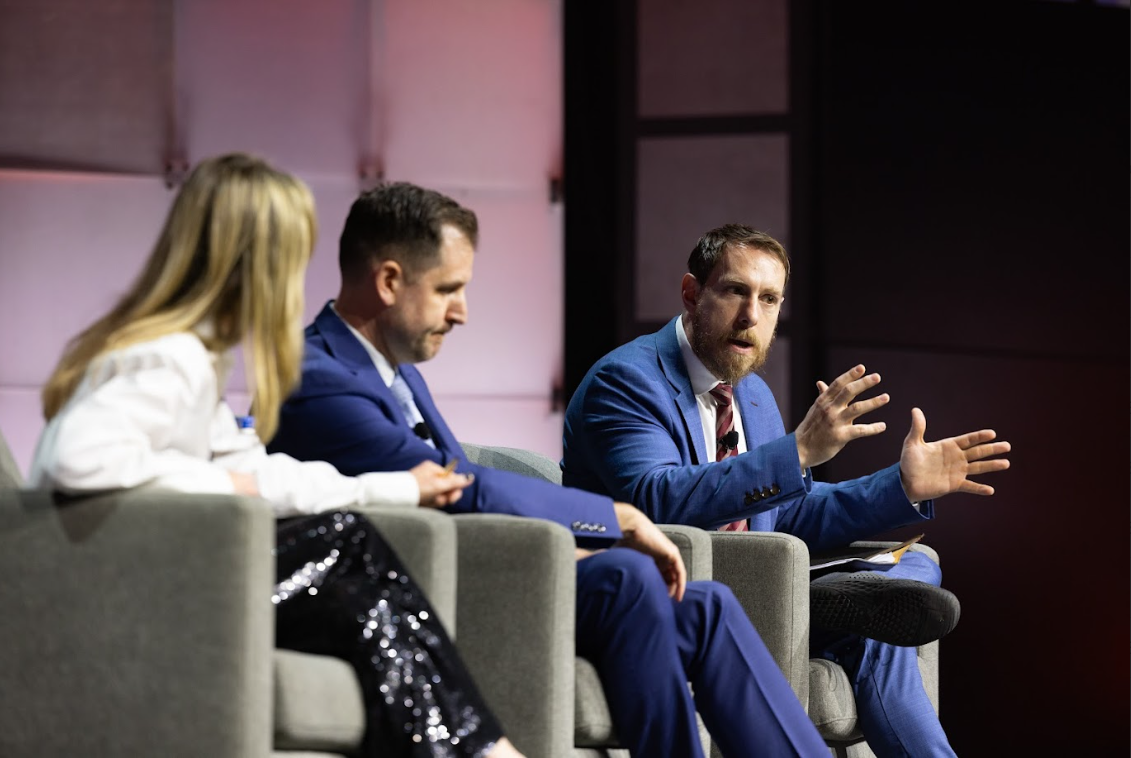
Andy Mapes, Acting Principal Deputy at the Department of War’s CDAO, added that for AI to move from a research project to a tool for decisive warfighter advantage, execution at scale depends on systems that operate together securely.
He described how the Department was “working with partners to really move at speed and show the potential that we have when it's not just one office working in isolation, but working across the department to move very quickly.”
Interoperability is the new baseline for the Administration, ensuring that data is no longer siloed but serves as a unified strategic asset.
Frontline Feedback: The Warfighter’s Perspective
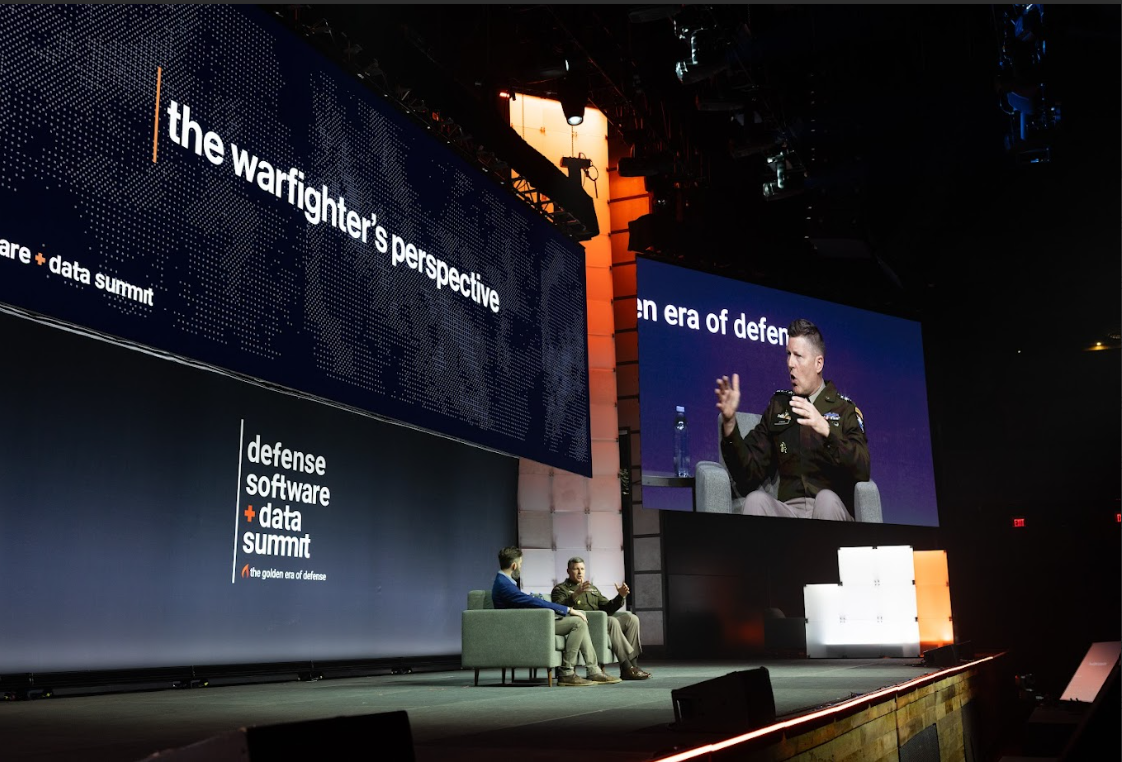
The Summit concluded with a discussion of the only metric that matters: the warfighter in the field. General Joseph A. Ryan, Commanding General of U.S. Army Western Hemisphere Command, sat down with John Seward of the Washington Times to discuss how technological advances and defense modernization interface with the dirt and danger of the tactical edge.
“We know despite what we do for the network, you know, any element of it, the data layer, the transport layer, right, the application layer, something is prone to fail at some point in time,” General Ryan cautioned. “The technological inputs are always going to make us faster when they work. We've always got to be prepared for the inevitable breakdown.”
Noting the austere environments in which warfighters operate daily, he highlighted a platform allowing commercial vendors to test their products with the Army in real-world conditions to gain feedback. “It's that iterative loop that will make us all better. We're going to learn from you and the intent is you're going to learn from us,” General Ryan said.
This isn't just a best practice—it can be a requirement for survival. For the soldier in the foxhole, an agile acquisition system can be the difference between coming home or not.
Three Signals for the Future
As the Summit concluded, the message was clear: the U.S. has the mandate, the resources, and the technology. What remains is the work of execution. Govini identified Three Signals from the Golden Era that we’re taking back to the mission to support the Secretary of War’s vision:
1. Execution is the Priority: The Administration has provided the engine; delivery is now the only fuel that matters.
2. Digital Transformation is the Imperative: Harnessing AI, data, and software is essential to transform defense acquisition and production into a decisive strategic advantage for the U.S.
3. Partnership is the Platform: Success is only possible through the seamless alignment of government, industry, and capital.
The 2026 Summit proved that the “Golden Era” is not a destination, but a state of action. Govini remains proud to facilitate this shift, helping the Administration turn policy momentum into mission-ready execution for the men and women in uniform.
On March 10, 2026, the doors of The Anthem in Washington, D.C., opened to a room filled with the leaders who will define the future of American security. The 4th annual Govini Defense Software & Data Summit arrived at a pivotal moment for the nation. For years, speed and agility in defense acquisition have been aspirations; under the Trump Administration they have now become absolute imperatives.
We have entered what many at the Summit called the "Golden Era of Defense", a period characterized by expanding policy authorities, empowered leadership, and the falling of long-standing structural barriers. But as Govini CEO Tara Murphy Dougherty noted in her opening remarks, the Golden Era is won through execution, not just momentum.
Setting the Stage: From Intent to Execution
In her address, Murphy Dougherty acknowledged that while 2026 marks a high-water mark for modernization mandates, the right conditions are merely the ingredients for change. She warned that the essential ingredients of funding and policy directives are insufficient without a fundamental shift in how the defense acquisition system operates.
“Modernization is no longer a suggestion. It is a mandate,” Murphy Dougherty stated. "But to materialize all of this momentum into real change, there must be commitment, will, and sustained action. So, the question our current moment in time raises is: Are we ready? Not in principle. Are we ready to execute?"
Murphy Dougherty provided a candid assessment of the quagmire currently separating intent from execution. She described the “muck” between innovative AI solutions and the institutional indecisiveness that prevents them from scaling. This asymmetry, she argued, is not a failure of personnel, but a failure of a system optimized for oversight rather than outcomes.
“On the front lines, decisions happen in seconds. Back at home, delivery can take years. In the past year, operational tempo has accelerated. Institutional tempo has not. This asymmetry is what creates the sizable gap between the demand for American military power and the supply... Warfighter heroics keep the system running. But heroics are not institutional preparedness, nor are they a long-term substitute.”
Murphy Dougherty concluded that Govini’s mission is to move beyond merely closing these gaps. Instead, the goal is to leverage AI, data, and software to transform the entire defense enterprise into a strategic advantage—ensuring that when the government is called, the system moves “at the speed of the mission.”
The “Pin” and the Problem: Under Secretary Michael Obadal on Translating Momentum into Mission Readiness
After this call to action by Murphy Dougherty, the morning proceeded with a sobering reality check from Hon. Michael A. Obadal, Under Secretary of the Army. In a fireside chat with POLITICO’s Joe Gould, Secretary Obadal held up a $988 steel cotter pin—a small, unassuming part used to secure bolts that was stalling the readiness of several Bradley Fighting Vehicles.
“This small piece, we have three or five Bradleys waiting on it because it holds in the toe pencil,” Obadal explained. “This right here is a perfect example of, we're going back and we're ordering things for hundreds of dollars that we could make for a few cents in the organic industrial base.”
The “pin” served as a powerful metaphor for the supply chain bottlenecks that the new Warfighting Acquisition System is designed to eliminate. The mandate from Secretary of War Pete Hegseth is clear: move acquisition from a bureaucratic hurdle to a mission-ready advantage.
The Engine of Peace Through Strength
The transition to this new footing requires a seamless alignment among warfighter demand, private capital, and the digital systems that turn intent into output. In a panel moderated by CNBC’s Morgan Brennan, leaders from each of these worlds discussed how the Department of War (DoW) and industry are moving beyond legacy models to build a resilient defense enterprise.
Mark Marengo, Managing Director at J.P. Morgan, noted: “I've been doing this for 30 years, and I've never seen this level of partnership and cooperation across industry, government, and the financial community.” Christopher T. Calio, Chairman and CEO of RTX, said, “The Department has given us a very clear North Star. And now we've got to go out and hit it.” Calio highlighted how targeted investments and a dedicated workforce at RTX are already driving faster results.
Major General David W. Smith, Deputy to the Chief of Air Force Reserve, emphasized that while leadership is committed to speed, the government must make requirements easier for industry to meet. “We need to just tell industry: What is [the] problem we're trying to solve? What is our capability gap? Allow industry to innovate on that, rather than the older system where we had these very exquisite requirements that we used to use when we were trying to deal with the industry.”
Joseph Welch, Executive Director for Transformation and Training Command (T2COM) and Portfolio Acquisition Executive for Command and Control (C2) and Counter C2, urged immediate feedback on potential acquisition hiccups so they can be resolved up front and quickly: “I would encourage anybody who thinks that we're doing something silly; you see a solicitation RFI; you think we could be doing better? Reach out to one of us.”
Major General Smith summed up the panel consensus: “If we want to create Freedom's Forge 2.0, it's going to take all of us up here on this stage working together. So, defense, industry, and private equity. That's how we get a revitalized defense industrial base.”
Augmenting the Arsenal through Software-Defined Manufacturing
The transition to industrial-scale execution is being further augmented by a revolution in software-defined manufacturing. In a fireside chat moderated by Govini Senior Vice President Jeb Nadaner, Kevin Czinger (Divergent Technologies) and Peter Meijer (The New Industrial Corporation) discussed how digital-first production is actively reinforcing the American Arsenal.
Czinger shared a staggering example of what fully-digitized manufacturing can achieve. “We recently worked with Mach Industries on a ground-launched cruise missile. It went from a whiteboard to a successful flight in just 71 days. …We expect to manufacture several thousand cruise missile systems this year using this system.”
This capability represents a critical shift in how the U.S. can develop and deploy hardware, proving that when software drives the factory floor, the timeline for innovation shrinks from years to weeks.
A Mandate for Modernization: Under Secretary Duffey on the WAS in Action
During a featured podium speech, Hon. Michael Duffey, Under Secretary of War for Acquisition and Sustainment, laid out the stakes and the mandate for the Warfighting Acquisition System. As chief implementer of this initiative, he argued that the gap between the speed of the commercial world and the sluggish pace of government processes has never been so vast or consequential.
“While we have debated requirements, [our adversaries] have conducted hundreds of hypersonic weapons tests—nearly 10 times as many as the United States. While we have published acquisition strategies, they are building a modern naval fleet at a speed not seen since World War II.”
Duffey highlighted the Trump Administration’s answer to this gap and DoW’s progress in creating an acquisition system built not for caution and compliance, but for speed and outcomes. “In this unique moment, we have a generational opportunity and a moral obligation to dismantle the slow, risk-averse bureaucracy of the past and build an acquisition system that delivers decisive capabilities at the speed of relevance,” he said.
“The job of our acquisition professionals is no longer just to manage a process. Our mission is to be a connector, to serve as the critical link that connects the warfighter's problem to the innovator solution with the least possible friction” Duffey explained. “Our mission to reduce that pathway is to shorten that as much as possible, to remove every obstacle, every toll booth, every delay that stands between a good idea and getting in the hands of the war fighter.
Noting that “time is our most critical, non-recoverable resource,” he urged the audience to be bold and challenge the status quo: “Leaders at every level must become agents of change.” Duffey set a high bar for the afternoon's deep dives into the Department’s most sensitive portfolios.
The No-Fail Mission: Nuclear Modernization
This shift from process to performance provided the ideal backdrop for a deep-dive panel on nuclear modernization. In the nuclear enterprise, the margin for error is zero. This “no-fail” mandate requires an enterprise that responds at the speed of the threat.
Hon. Brandon Williams, Administrator of the NNSA, highlighted the three pillars of NNSA’s immediate focus: deterrence, urgency, and production. “Six months beyond that, it's really about execution,” he explained, noting that NNSA must demonstrate it is modernizing the production capability, delivering weapons on time, and keeping pace with the growing deterrent challenges from China and Russia.
For Lt. General Michael Lutton, Deputy Commander of U.S. STRATCOM, “modernization doesn't mean more. [It] means modernization.” As an example, he cited the long-term need to modernize Minuteman III, which has been on alert for the nation for five decades. “We will have to sustain the nuclear deterrent force all the way through the modernization of its replacement.”
Both emphasized the urgency of the transformation. “Modernization provides decision space, it provides options for our most senior leaders, Secretary of War, President of the United States,” said Lutton. “We have to have an enterprise that can respond at pace,” said Williams. “The two of us have a no fail mission for the nation, period.”
Accelerating Mission Readiness: Leveraging Flexible Authorities to Bridge the Innovation Gap
The afternoon sessions shifted focus toward the practical application of the Administration’s vision: leveraging flexible authorities and empowered leadership to bridge the gap between industry innovation and immediate warfighter needs. Moderated by Breaking Defense’s Valerie Insinna, this panel explored how the Department of War is moving beyond business as usual to ensure combat readiness.
Rear Admiral Chad Jacoby, Deputy Commandant for Systems at the U.S. Coast Guard, provided an example of how streamlining is already yielding results. He described how federal requirements documents at the Coast Guard—which once spanned 200 pages and required 27 signatures—were reduced to a single page document in recent ship construction programs. “Moving at speed has allowed us to be bold,” Jacoby said. “We’re going to be nimble and we’re going to be asking for industry to help us along the way.”
Dr. Vic Ramdass, Principal Deputy Assistant Secretary of War for Industrial Base Policy, and Patrick N. Kelleher, Deputy Assistant Secretary of the Army for Materiel Readiness, emphasized that this agility is the new baseline. The discussion underscored that by empowering leaders to use the full extent of their authorities, the Department is finally aligning its institutional tempo with the operational needs of the force.
Trust and Interoperability in AI: Deploying Frontier Models for Combat Advantage
As the Summit moved into the final panels, the conversation turned to the “brains” of the modern enterprise: Artificial Intelligence. This session, moderated by Govini CEO Tara Murphy Dougherty, focused on the intersection of commercial AI and mission-critical data, and the practicalities of deploying frontier models within the Department’s framework.
The consensus was clear: AI adoption is not about a single algorithm, but about building a trusted, interoperable ecosystem. Justin Fanelli, Chief Technology Officer for the Department of the Navy, highlighted the collaborative nature of this era. “There’s an old saying: if you want to go fast, go alone; if you want to go far, go together," he said. “We actually have a situation where we're going fast together, aligned. In 27 years, I've seen it for specific surges, but I've never really seen it scale.”
Andy Mapes, Acting Principal Deputy at the Department of War’s CDAO, added that for AI to move from a research project to a tool for decisive warfighter advantage, execution at scale depends on systems that operate together securely.
He described how the Department was “working with partners to really move at speed and show the potential that we have when it's not just one office working in isolation, but working across the department to move very quickly.”
Interoperability is the new baseline for the Administration, ensuring that data is no longer siloed but serves as a unified strategic asset.
Frontline Feedback: The Warfighter’s Perspective
The Summit concluded with a discussion of the only metric that matters: the warfighter in the field. General Joseph A. Ryan, Commanding General of U.S. Army Western Hemisphere Command, sat down with John Seward of the Washington Times to discuss how technological advances and defense modernization interface with the dirt and danger of the tactical edge.
“We know despite what we do for the network, you know, any element of it, the data layer, the transport layer, right, the application layer, something is prone to fail at some point in time,” General Ryan cautioned. “The technological inputs are always going to make us faster when they work. We've always got to be prepared for the inevitable breakdown.”
Noting the austere environments in which warfighters operate daily, he highlighted a platform allowing commercial vendors to test their products with the Army in real-world conditions to gain feedback. “It's that iterative loop that will make us all better. We're going to learn from you and the intent is you're going to learn from us,” General Ryan said.
This isn't just a best practice—it can be a requirement for survival. For the soldier in the foxhole, an agile acquisition system can be the difference between coming home or not.
Three Signals for the Future
As the Summit concluded, the message was clear: the U.S. has the mandate, the resources, and the technology. What remains is the work of execution. Govini identified Three Signals from the Golden Era that we’re taking back to the mission to support the Secretary of War’s vision:
1. Execution is the Priority: The Administration has provided the engine; delivery is now the only fuel that matters.
2. Digital Transformation is the Imperative: Harnessing AI, data, and software is essential to transform defense acquisition and production into a decisive strategic advantage for the U.S.
3. Partnership is the Platform: Success is only possible through the seamless alignment of government, industry, and capital.
The 2026 Summit proved that the “Golden Era” is not a destination, but a state of action. Govini remains proud to facilitate this shift, helping the Administration turn policy momentum into mission-ready execution for the men and women in uniform.


